How to Create an Efficient Open Office Workspace
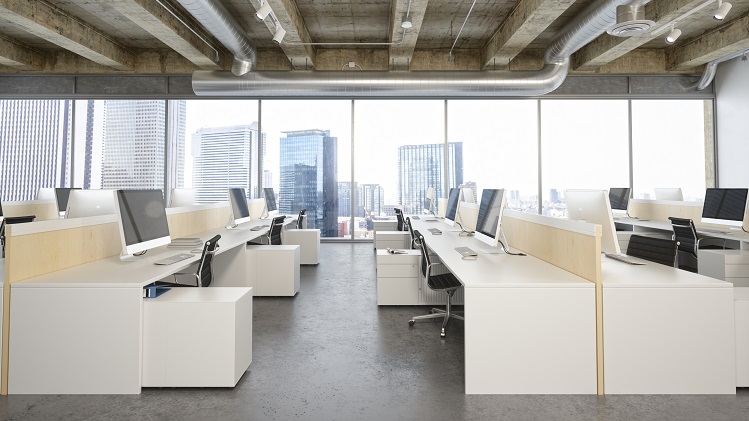
Open-office floor plans are nothing new. In fact, many companies have adopted some variation of an open-office environment. We want employees to feel valued and know they are a vital, unique, and important part of the organization, and the flexibility and adaptability of open offices can support this if utilized well. But the consensus is not always positive. Employees can feel frustrated and distracted when open-office plans are not carefully executed.
Open-office spaces offer many potential benefits, including increased collaboration and idea generation, a change of surroundings, and a sense of community. But at the same time, the space can be noisy, distracting, and make people feel like they are being watched over and not trusted. We want open-office environments to provide a sense of flexibility and control in the work environment, not the opposite. Below are some ideas that can help improve efficiency, productivity, and satisfaction in an open-office setting.
Provide alternative spaces and seating for employees to work.
Don’t confine employees to a single, assigned space. Different assignments will likely require different levels of focus and collaboration. Having group spaces available, as well as smaller, enclosed areas for isolated work, not only accommodates different personality types, but also provides a sense of freedom and autonomy for employees to choose what setting works for them at any time. Additionally, providing standing work stations and active seating, such as exercise balls, can keep energy levels up.
Think about what types of workers are sitting next to each other.
Your office may have some employees who are highly productive in terms of output but less detailed in their work and others who work at a slower pace but produce a higher quality product. When different types of work ethics share a space, they often rub off on one another. This can lead to increased efficiency and improved quality.
Embrace movable furniture.
Having office furniture that can be easily rearranged allows for a collaborative atmosphere that fosters a sense of freedom and creativity. New ideas can be sparked, and meetings can be made a little more interesting. It also helps to accommodate different meeting types and group sizes easily and allows for collaboration when needed but more privacy when desired.
Allow a work from home option.
Add another layer of flexibility to the open-office workplace with an option to work from home a set amount of time each week or month. This can help increase satisfaction among employees, giving them more flexibility to take care of appointments and other obligations. Additionally, it can improve morale and motivation by lessening their sense of being constantly watched.
Make sure management is on board.
It is one thing for management to say the open office environment is great, as they are often able to walk away from it when they need to. It’s critical for management to encourage and support the open-office environment. It can be easier to lose focus and become distracted in an open office, so providing some sort of prioritization or to-do list can help keep employees on track and feeling supported. Additionally, managers can embrace the collaboration mentality by being accessible and available for discussion as much as possible. Finally, don’t only ask for feedback on the office layout, but listen to it! Employees are much more likely to keep a positive frame of mind if they feel their opinions are being considered and ideas implemented.
It can be a rough transition to change how people are used to working, but flexibility and open communication can help make the process successful. After all, that is what open-office layouts are all about!
Sources:
https://hbr.org/2015/05/why-people-thrive-in-coworking-spaces
https://online.rivier.edu/open-office-layout-and-employee-productivity/
https://www.bloomberg.com/news/articles/2016-08-01/the-ideal-office-floor-plan-according-to-science
https://facilityexecutive.com/2017/05/7-tips-for-maximizing-productivity-in-an-open-office/



An insurance company that cares about you and insuring the things you wish to be insured.
Get a Quote> Find an Agent>