10 Considerations for OSHA Fall Protection Training Compliance
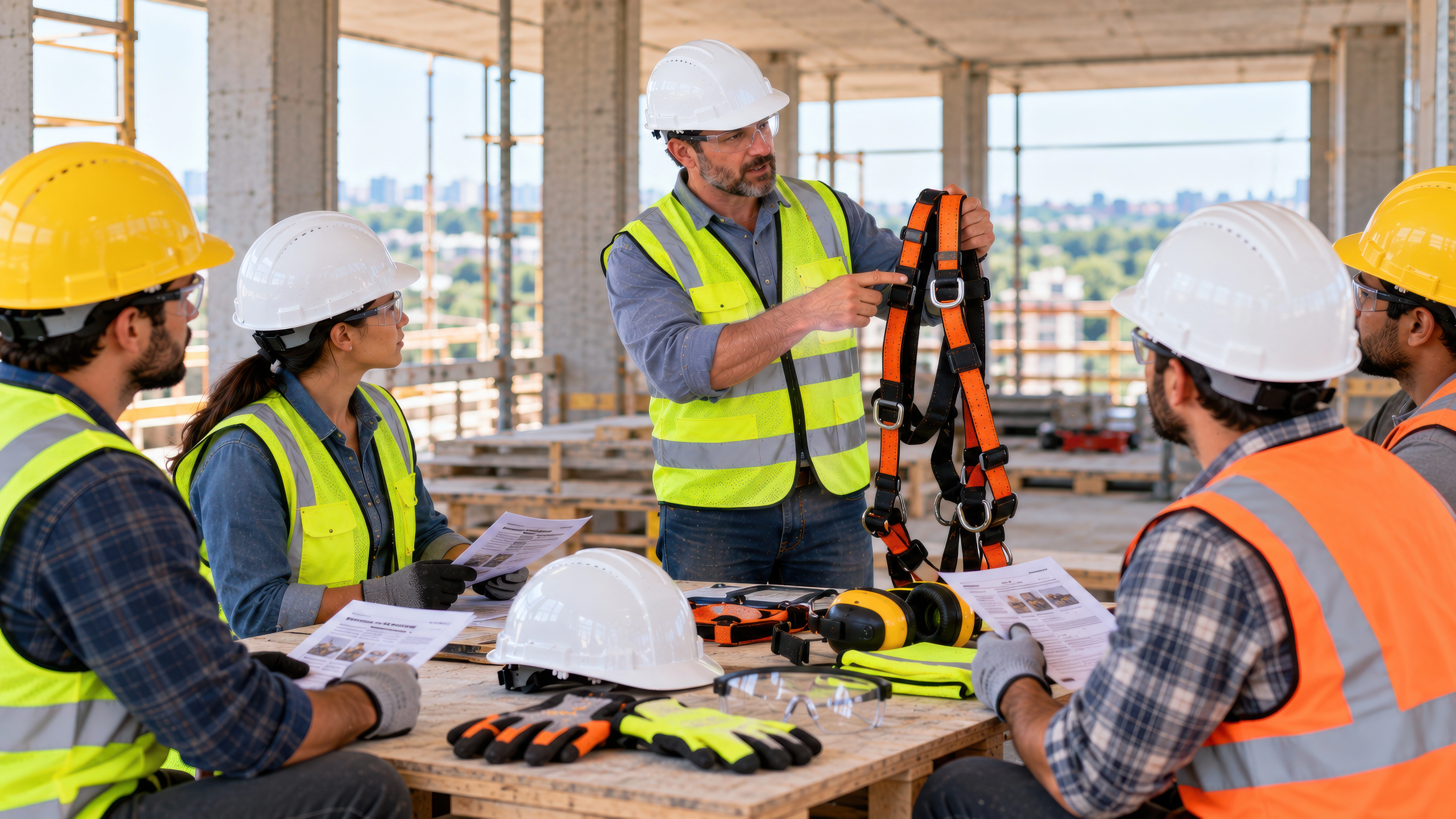
OSHA lists Fall Protection—Training Requirements for construction as one of its top 10 most frequently cited standards. That ranking is a reminder that fall protection training is more than scheduling a meeting and making sure everyone signs the training log. To be effective, fall protection training should be practical, site-specific, and easy for workers to apply before the work starts. Review these 10 considerations to strengthen training and help employees recognize, avoid, and control fall exposures.
- Customize training based on exposure. Effective programs match training to each worker’s potential exposure. Anyone who may enter a work area where a fall to a lower level could occur—including managers, engineers, designers, delivery drivers, and even your social media person—should know how to recognize and avoid the hazard. You don’t have to perform “construction work” to be an exposed worker. Specialized instruction, such as properly using a fall protection harness, is only needed for employees who will use the equipment.
- Use a competent person to conduct the training. A competent person is someone who has the experience, training, and knowledge to recognize existing and potential hazards and the authority to stop work and correct them. A general contractor may communicate jobsite fall protection requirements, and a rental company may provide technical training on how a lift operates. However, the employer remains responsible for making sure training is adequate for the hazards, equipment, and jobsite.
- Provide general training before workers are exposed to the hazard. Use classroom instruction to introduce fall prevention in a safe, controlled setting. Before work begins, workers should understand where leading edges, floor openings, and unprotected sides may be present and avoid those areas until proper protection is in place. A live fall exposure should never be part of the lesson plan.
- Address jobsite-specific hazards at every site. Site-specific training should explain where hazards are located on the project and how falls will be controlled, including approved tie-off locations, protection during upper-floor deliveries, and temporary guardrail installation. It is a good practice to include the project name on site-specific training records to help identify the location and hazards the training addressed.
- Stay abreast of changes at the jobsite that may require additional training. Construction projects do not always go exactly as planned. If an architect changes the building plans, workers may encounter new fall exposures, and their previous training may be incomplete or outdated. When new equipment is provided, retraining is needed. For example, if a rental company sends a different model of lift, workers need training on that equipment. Monitor changing jobsite conditions and provide additional training when new fall hazards, equipment, or protection methods are introduced. Having a daily safety meeting is a good way to make sure employees are aware of new exposures and important controls. Documenting these discussions helps verify the training provided and demonstrates proactive safety efforts if OSHA investigates.
- Customize training for the specific fall protection equipment used. For most equipment, training should cover how to set up, inspect, use, and maintain it. The manufacturer’s instructions or owner’s manual can be a useful reference. Whenever you purchase new equipment, remember to allow time for documented training.
- Train for when things don’t go as planned. If a worker falls while wearing a harness, workers should know how to perform a self-rescue and assist with a rescue. Self-rescue features on fall protection harnesses vary by manufacturer and model, and some harnesses do not include them. A scissor lift may be an option, but only if it is available, accessible, and operated by a trained person. Establish and practice a rescue plan before a fall occurs because prolonged suspension can cause serious harm. For more guidance, see the CPWR Fall Rescue Planning Tipsheet.
- Deliver training in a way employees understand, then verify their understanding. Consider language, cultural barriers, and education levels when conducting training. Attending a meeting does not equal effective training. Asking trainees questions during training can help, but observing safe work practices is an even better way to confirm that the message was understood.
- Retrain when employees do not appear to understand or follow prior training. Retraining may be needed after an accident, near miss, observed unsafe act, or unsafe condition. Supervisors should conduct post-training and periodic field observations to confirm employees are applying what they learned.
- Maintain training documentation. Records should include the training date, topic, employee name, and signatures of both the trainer and employee. OSHA or a general contractor’s safety manager may request these records, so keep them current, organized, and easy to access.
The most effective way to prevent falls is to keep workers at ground level whenever possible—if they do not go up, they cannot fall. But when employees are exposed to fall hazards, effective training can help keep them safe and help prevent costly OSHA violations. Free resources on fall prevention are available from the Center for Construction Research and Training.


An insurance company that cares about you and insuring the things you wish to be insured.
Get a Quote> Find an Agent>